Manchester Golf Club
Manchester Golf Club (Middleton, Lancashire, England)
Nestled in the picturesque countryside of Middleton, Lancashire, Manchester Golf Club stands as a testament to the timeless allure of golf. Imagine standing on the elevated first tee, the vast expanse of moorland stretching before you, as the gentle breeze whispers through the heather. This is not just a golf course; it’s a journey through history, challenge, and natural beauty. Established in 1882 and moved to its current location in 1912, Manchester Golf Club is a Harry Colt masterpiece, where every hole tells a story of strategic design and scenic splendor.
From its role as a host to prestigious tournaments like the Reid Trophy and Women’s Open Strokeplay Championship to its reputation as one of Lancashire’s finest inland courses, Manchester Golf Club invites golfers to test their skills while immersing themselves in the rich legacy of the game. Whether you’re teeing off amidst rolling fairways or following in the footsteps of golfing legends, this course promises an unforgettable experience that blends challenge with serenity.
Key Details
- Location: Hopwood, Middleton, Lancashire, England
- Length: 6,491 yards (from white tees)
- Par: 72
- Designers: Harry Shapland Colt (original design), with later modifications
- Established: 1882 (current location since 1912)
- Notable Events: Hosted England Golf’s Reid Trophy and Women’s Open Strokeplay Championship
History and Significance
Manchester Golf Club’s story begins in October 1882 when eight enthusiastic golfers founded the club, initially playing on a small nine-hole course at Manley Park in Whalley Range, Manchester. Known then as Manchester St Andrew’s Golf Club, it later became The ‘Old’ Manchester Golf Club in 1883 to distinguish itself from another local club. Urbanization forced a relocation, and in 1898, the club moved to Trafford Park, leasing land from the Trafford Park Estates Company and using Trafford Hall as its clubhouse. This period marked the course as one of the most prestigious in the region, attracting golfers from across Lancashire.
In 1910, the club announced its move to Hopwood Park, securing a 35-year lease from Christmas Day 1912. The new course, designed by the legendary Harry Shapland Colt, was ready by September 1911 and officially opened on March 30, 1912. Originally measuring 6,145 yards, it has since been extended to 6,491 yards. In 1925, the club purchased the freehold of Hopwood Park for £10,000, ensuring its permanence at this stunning location. Colt’s design capitalized on the undulating terrain, creating a course that remains a benchmark for inland golf in England.
The club has been a cradle for golfing talent, hosting Ryder Cup legends like Lee Westwood, Darren Clarke, and Howard Clarke, as well as nurturing future stars such as Joe Bannan and Casey Jarvis, the latter winning the 2017 Reid Trophy. Members have proudly represented Lancashire and England, with professionals like Roger Smithies, Kelly Tidy, and Rachel Connor emerging from its ranks. The club’s junior development programme is renowned, inspiring the next generation of golfers. Notable events, including the Lancashire Amateur Championship and PGA European Tour Qualifying School, have further cemented its reputation.
Beyond its sporting achievements, Manchester Golf Club holds cultural significance as a community hub. It is celebrated for its event organization, hosting weddings, conferences, and special occasions with stunning surroundings and exceptional hospitality. The club’s commitment to preserving its heritage while embracing modern standards is evident in its 1985 clubhouse renovations, which transformed Hopwood Cottage into a modern facility while retaining its historic charm. Manchester Golf Club is not just a place to play golf; it’s a destination where history, community, and sport converge.
Course Features
Manchester Golf Club’s 18-hole course spans 240 acres of predominantly moorland terrain, with heathland and parkland features that create a diverse and engaging layout. Designed by Harry Colt, the course is a strategic masterpiece, where thoughtful club selection and precise shot-making are rewarded. The undulating landscape, with its rolling fairways and elevated tee boxes, offers stunning views of the Lancashire countryside, making every round a visual delight.
The course’s unique features include over 100 bunkers, strategically placed to challenge accuracy and decision-making. Some bunkers are deep and intimidating, while others are more subtle, requiring careful navigation. Natural hazards such as streams and ponds add to the challenge, particularly on holes like the par-5 14th, where water comes into play. The fairways are wide and welcoming but flanked by graded rough, which can quickly turn into gnarly moorland grass if you stray too far.
This rough is notoriously difficult to escape, emphasizing the importance of staying on target. Wind is a constant companion at Manchester Golf Club, adding another layer of complexity. The open moorland layout exposes players to the elements, making club selection crucial. The greens are well-manicured but undulating, with subtle contours that demand precision on approach shots. Many greens are raised or set on plateaus, offering dramatic backdrops and testing players’ ability to read the terrain. Scenic elements abound, with each hole offering its own character.
From the elevated first tee, players can see the vast expanse of the course, setting the stage for an epic round. The course’s rural setting, with far-reaching views of the Lancashire landscape, provides a tranquil escape from the hustle of city life. Wildlife, including deer, is often spotted, adding to the natural beauty and serenity of the setting.
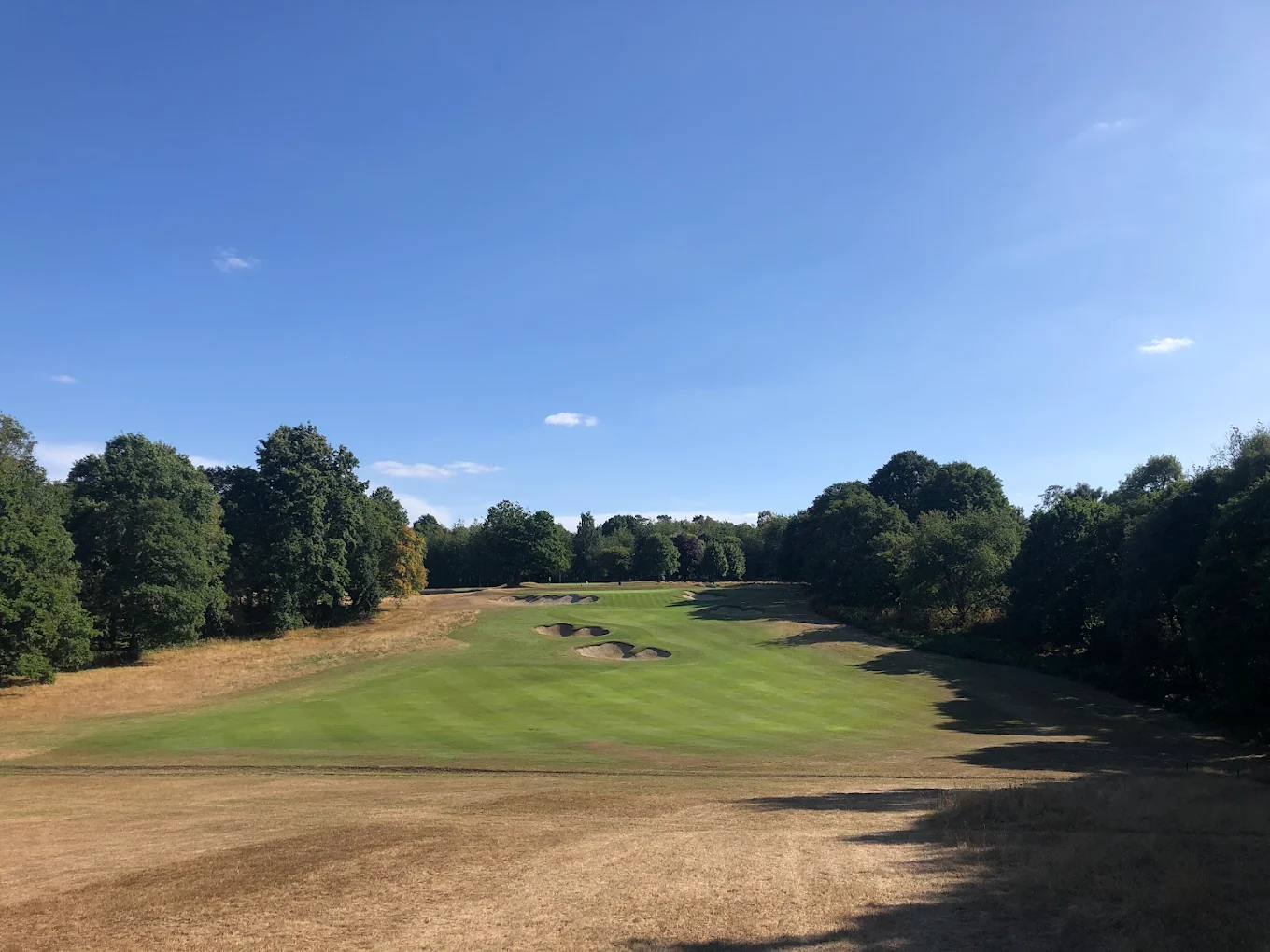
Signature Holes
Manchester Golf Club’s course is renowned for its variety and challenge, with several holes standing out as true signatures of the layout. Here are five iconic holes that showcase the course’s character and allure:
Hole 1: Par-4, 328 yards
- Description: The first hole sets the tone for the round with its visually appealing layout. From the elevated tee, players are greeted with a sweeping view of the fairway, which slopes gently downhill. A well-placed bunker guards the left side of the fairway, while the green, slightly raised and protected by bunkers on the right, demands an accurate approach.
- Unique Aspects: This hole introduces players to the course’s scenic beauty and strategic design, making it a memorable start.
- Historical Anecdotes: As the opening hole, it has welcomed countless golfers, from amateurs to professionals, setting the stage for their round.
Hole 2: Par-4, length not specified
- Description: This hole is notorious for its bunkering, with seven bunkers within 100 yards of the green. The fairway is wide but undulating, requiring a precise drive to avoid the rough. The approach shot must navigate the bunkers to reach the green, which is slightly elevated and slopes from back to front.
- Unique Aspects: The sheer number of bunkers makes this hole a test of accuracy and nerve, especially for players who miss the fairway.
- Historical Anecdotes: This hole has been a graveyard for many scores, with even experienced golfers struggling to escape the bunkers.
Hole 4: Par-3, length not specified
- Description: A pretty par-three that offers both aesthetic appeal and challenge. The tee shot must carry a valley to reach the green, which is set on a plateau. The green is small and undulating, with bunkers guarding the front and right sides.
- Unique Aspects: The hole’s design, with its elevated green and surrounding bunkers, makes it a favorite among photographers and golfers alike.
- Historical Anecdotes: This hole has been praised for its classic design, reminiscent of Colt’s work at other renowned courses.
Hole 8: Par-3, 157 yards
- Description: A short but demanding par-three, this hole is exposed to the elements, with the green sloping left-to-right. Three bunkers surround the green, making anything but a precise shot punishing. The tee shot must account for wind and the slope of the green.
- Unique Aspects: Despite its short length, this hole is a true test of shot-making, especially in windy conditions.
- Historical Anecdotes: Many golfers have recounted the drama of this hole, where a well-struck shot can still lead to trouble if not perfectly placed.
Hole 13: Par-3, length not specified
- Description: Played over a valley, this short par-three features a squashed oval-shaped plateau green with steep drop-offs on all sides except the rear. The tee shot must carry the valley and land softly on the green, as anything short or long will result in a difficult recovery.
- Unique Aspects: The hole’s design, with its dramatic elevation change and small target, makes it one of the most memorable on the course.
- Historical Anecdotes: This hole is often cited as a favorite among members and visitors for its challenge and beauty.
Why Visit
Manchester Golf Club is a golfer’s paradise, offering a unique blend of challenge, history, and natural beauty. Designed by Harry Colt, one of golf’s most revered architects, the course is a masterpiece of strategic design, with its mix of moorland, heathland, and parkland features providing a diverse and engaging round. The course’s reputation as one of Lancashire’s finest inland courses, coupled with its history of hosting prestigious tournaments like the Reid Trophy and Women’s Open Strokeplay Championship, makes it a destination for golfers of all levels.
The appeal of Manchester Golf Club lies in its challenges. With over 100 bunkers, undulating fairways, and greens that demand precision, the course tests every aspect of a golfer’s game. The ever-present wind adds another layer of complexity, requiring thoughtful club selection and adaptability. Yet, amidst the challenges, the course offers moments of serenity, with scenic views of the Lancashire countryside and the occasional sighting of wildlife like deer.
For those seeking an emotional connection to golf’s legacy, Manchester Golf Club offers the chance to walk in the footsteps of legends. Players like Lee Westwood and Darren Clarke have graced its fairways, and the course’s rich history resonates with every step. Tom Watson, a golfing icon, once described the course as “testing your soul,” a testament to its ability to challenge and inspire. Quotes from golfers further highlight the course’s allure.
One visitor remarked, “It’s not just a course; it’s an experience,” while another praised the “perfect balance of challenge and beauty.” The club’s facilities, including luxury dining options and top-notch practice areas, enhance the overall visit, ensuring that every golfer leaves with a smile. Practical benefits also make Manchester Golf Club an attractive destination. Its location, just 20 minutes from Manchester city center, makes it easily accessible, while its membership options and visitor-friendly policies ensure that everyone can enjoy the experience. Whether you’re a local golfer or a visitor from afar, Manchester Golf Club offers an unforgettable day on the links.
Facilities
Manchester Golf Club boasts a range of facilities designed to enhance the golfing experience. The recently refurbished clubhouse is a welcoming space, offering dining options with local cuisine, a pro shop stocked with the latest golfing gear, and lounges for relaxation. It’s also the perfect venue for events, conferences, and functions, with state-of-the-art facilities to cater to any occasion.
For those looking to improve their game, the practice areas are second to none. The club features a 300+ yard driving range equipped with Trackman technology, allowing golfers to analyze their swings and distances. An architect-designed short game area, a Golf Performance Centre, a Putting Lab, and a Golf Academy provide ample opportunities for skill development. These facilities are open to visiting golfers, ensuring that everyone can refine their game.
Additional services include caddy services, golf lessons, and even unique activities like falconry, adding a touch of adventure to the visit. The club’s commitment to excellence extends to its staff, who are known for their friendliness and professionalism, ensuring that every visitor feels at home.
Contact Details and Directions
- Address: Hopwood Cottage, Rochdale Road, Manchester, Lancashire, M24 2QP
- Phone: +44 (0)1655 331000
- Email: reservations@manchestergolfclub.co.uk
- Directions: Located just 20 minutes from Manchester city center, the club is easily accessible via major motorway links. From Glasgow, it’s approximately a 1-hour drive via the A77. For public transport users, the nearest train station is Girvan, about 5 miles away, from where a taxi can be taken to the club. On-site parking is available with ample space for visitors.
- Map: View on Google Maps
Green Fees and Booking
Pricing:
|
Season |
Non-Resident (Before 1pm) |
Non-Resident (After 1pm) |
Hotel Guest |
Resident |
|
Off-Peak (Apr-Oct) |
£1,000 |
£545 |
£425 |
£315 |
|
Peak (Nov-Mar) |
£315 |
£315 |
£315 |
£315 |
- Membership Options: Available upon inquiry.
- Booking Process: Tee times can be booked online via the club’s website or by contacting the reservations team directly.
- Requirements: A handicap certificate may be required for certain tee times, and smart attire is expected on the course (no jeans, tee shirts, hooded sweatshirts, or metal spikes; collared shirts are mandatory).
Nearby Attractions
Lancashire blends history, culture, and natural beauty, making it an ideal destination for golfers and their companions. Here are some notable attractions near Manchester Golf Club:
|
Attraction Name |
Appeal |
Distance from Club |
|
Culzean Castle |
Historical tours, cliffside gardens |
10 miles |
|
Blackpool Pleasure Beach |
Family-friendly amusement park |
30 miles |
|
Manchester Art Gallery |
Fine art collection |
7 miles |
|
Heaton Park |
Largest municipal park, trails |
5 miles |
|
Lancashire Wildlife Trust Reserves |
Nature exploration |
15 miles |
|
Bury Transport Museum |
Historic vehicles, interactive |
8 miles |
|
East Lancashire Railway |
Scenic heritage railway rides |
12 miles |
|
Rivington Terraced Gardens |
Panoramic views, leisurely walks |
20 miles |
|
Manchester Museum |
Natural history, anthropology |
7 miles |
- Culzean Castle: This 18th-century castle, perched on a cliff, offers guided tours through its opulent interiors and expansive gardens, providing a glimpse into Scotland’s aristocratic past.
- Blackpool Pleasure Beach: A thrilling amusement park with roller coasters, water rides, and family-friendly attractions, perfect for a fun day out.
- Manchester Art Gallery: Located in the city center, this gallery showcases an impressive collection of paintings, sculptures, and decorative arts, including works by Pre-Raphaelite artists.
- Heaton Park: Europe’s largest municipal park features rolling landscapes, a miniature railway, and historical buildings, ideal for walks and picnics.
- Lancashire Wildlife Trust Reserves: These reserves offer opportunities to observe local flora and fauna, with trails winding through diverse habitats.
- Bury Transport Museum: Interactive exhibits and vintage vehicles make this museum a hit for transport enthusiasts and families.
- East Lancashire Railway: A heritage railway offering scenic steam train rides through the picturesque Lancashire countryside.
- Rivington Terraced Gardens: These gardens, with their stone towers and winding paths, provide stunning views and a peaceful retreat.
- Manchester Museum: Home to extensive collections in natural history, anthropology, and Egyptology, this museum is a cultural gem in the city center.
These attractions ensure that visitors to Manchester Golf Club can complement their golfing experience with a rich exploration of Lancashire’s offerings.
Frequently Asked Questions (FAQs)
1. How can I book a tee time at Manchester Golf Club?
Tee times can be booked online through the club’s website or by contacting the reservations team directly via phone or email.
2. What are the green fees for non-residents?
Green fees vary by season and time. During off-peak (Apr-Oct), non-residents pay £1,000 before 1pm and £545 after 1pm; during peak (Nov-Mar), it’s £315.
3. Is Manchester Golf Club suitable for beginners?
The course is challenging but offers multiple tee options, including forward tees, making it accessible for beginners and golfers of all skill levels.
4. What is the best time to play at Manchester Golf Club?
Off-peak seasons (Nov-Mar) offer lower fees and fewer crowds, but the course’s beauty shines year-round, with each season providing a unique experience.
5. Is there a dress code at Manchester Golf Club?
Smart attire is required. Jeans, tee shirts, hooded sweatshirts, and metal spikes are prohibited; collared shirts are mandatory.
6. What facilities are available at Manchester Golf Club?
Facilities include a clubhouse with dining, a pro shop, a 300+ yard driving range with Trackman, short game area, putting green, and caddy services.
7. How do I get to Manchester Golf Club from Manchester city center?
The club is 20 minutes from the city center via major motorways. Public transport includes trains to Girvan station, 5 miles away, followed by a taxi.
8. Are there other golf courses near Manchester Golf Club?
Nearby courses include Heaton Park Golf Course, Bolton Old Links, and Withington Golf Club, offering varied golfing experiences.
9. Has Manchester Golf Club hosted any major tournaments?
The club has hosted prestigious events like England Golf’s Reid Trophy and Women’s Open Strokeplay Championship.
10. Why is Manchester Golf Club famous?
It’s renowned as one of Lancashire’s best inland courses, designed by Harry Colt, with a rich history and challenging layout.
11. Is accommodation available at Manchester Golf Club?
The club does not offer accommodation, but nearby hotels and resorts provide convenient lodging options.
12. Are memberships available at Manchester Golf Club?
Memberships are available; interested individuals can contact the club for details.
13. What is the weather like at Manchester Golf Club?
Lancashire’s weather is variable, with mild summers and cool, wet winters. Check the forecast and dress appropriately.
14. Can you tell me more about the history of Manchester Golf Club?
Founded in 1882, it moved to its current Harry Colt-designed course in 1912, becoming a revered venue for championships and golfers worldwide.
15. What are some unique features of Manchester Golf Club?
The 240-acre course blends moorland, heathland, and parkland, with scenic views, over 100 bunkers, and state-of-the-art practice facilities.
Burhill Golf Club Old Course
Burhill Golf Club Old Course (Surrey, England) Nestled in the heart of Surrey’s picturesque parkland, Burhill Golf Club stands as a testament to the timeless elegance of golf. Since its opening in 1907, this venerable course, crafted by the legendary Willie Park Jr.,...
Thorndon Park Golf Club
Thorndon Park Golf Club (Brentwood, Essex, England) Nestled in the heart of Essex, just a stone’s throw from the bustling M25, Thorndon Park Golf Club is a hidden gem that offers golfers a tranquil escape into the past while challenging them with a course that has...

Essendon Country Club Old Course
Essendon Country Club Old Course (Essendon, Hertfordshire, England) Nestled in the heart of Hertfordshire’s rolling countryside, Essendon Old Course is a gem of English golf. Designed by Fred Hawtree in 1976, this 6,793-yard, par-72 parkland course weaves through...
Brampton Golf Club
Brampton Golf Club (Brampton, Cumbria, England) Picture yourself on the first tee, the crisp Cumbrian air carrying whispers of golfing history as you prepare to swing. Brampton Golf Club, nestled in the rolling hills of Cumbria, England, is a hidden gem that marries...
Beaconsfield Golf Club
Beaconsfield Golf Club (Buckinghamshire, England) Beaconsfield, a picturesque market town in Buckinghamshire, England, is a delightful blend of historical charm and modern convenience, located just 24 miles northwest of central London. Nestled in the rolling Chiltern...