
Beaconsfield Golf Club
Beaconsfield Golf Club — Harry Colt’s Chiltern parkland classic
Step off the train at Seer Green & Jordans and you are, quite literally, in the golf club’s car park — a quirk of history that tells you everything about the ambition behind Beaconsfield Golf Club. Set in the village of Seer Green near Beaconsfield in Buckinghamshire, this is a classic Harry Colt parkland course, laid out in 1913 and opened in 1914, measuring 6,584 yards from the back tees with a par of 72.
The course remains remarkably faithful to Colt’s original design, with his trademark bunkering, unusually large greens and holes threaded individually through mature mixed woodland. It is regularly counted among the leading parkland courses in the country, and it wears its heritage lightly — this is a traditional members’ club that genuinely welcomes visitors.
Key Details
- Location: Farm Lane, Seer Green, Beaconsfield, Buckinghamshire HP9 2UR, England
- Length: 6,584 yards (Black tees); 6,171 yards from the Blue tees normally used by visiting men
- Par: 72 (35 out, 37 in)
- Designer: H.S. (Harry) Colt, 1913
- Established: 1902 as the nine-hole Wilton Park Golf Club; the present course and clubhouse opened in July 1914
- Notable events: The Luke Donald Salver, a 36-hole junior medal on the Berks, Bucks & Oxfordshire Order of Merit
History and significance
Beaconsfield Golf Club owes its existence to Colonel William Du Pre, whose family — descendants of French Huguenots — had owned the Wilton Park estate east of Beaconsfield since the 1770s. A world-class croquet player and later MP for High Wycombe, the Colonel caught the golfing bug as the game swept southern England, and in 1902 he established the Wilton Park Golf Club with a nine-hole course in his grounds.
His ambitions soon outgrew nine holes. In 1913 he engaged Harry Colt — described by Henry Longhurst as “the best golf architect of all time”, and already the designer of Stoke Poges, St George’s Hill and the Eden at St Andrews — to lay out a full eighteen on another part of the estate, while the noted London architect Stanley Hamp designed the clubhouse. When the London to Birmingham railway cut through the estate, Du Pre extracted a covenant obliging the railway companies to build a halt beside his planned “Golf House”; that halt, now Seer Green & Jordans station, opened in 1915, a year after the club itself.
Beaconsfield Golf Club opened in grand style on 18 July 1914 with an exhibition match featuring Harry Vardon and Ted Ray. War intervened just three weeks later, and a second celebratory exhibition followed in 1920, this time starring James Braid, George Duncan, Abe Mitchell and Vardon again. After the Colonel’s death in 1946, the members purchased the course and clubhouse outright for £12,000, securing the club’s independence. Today the club hosts the Luke Donald Salver, a prestigious junior championship named in honour of the former world number one.
The course and how it plays
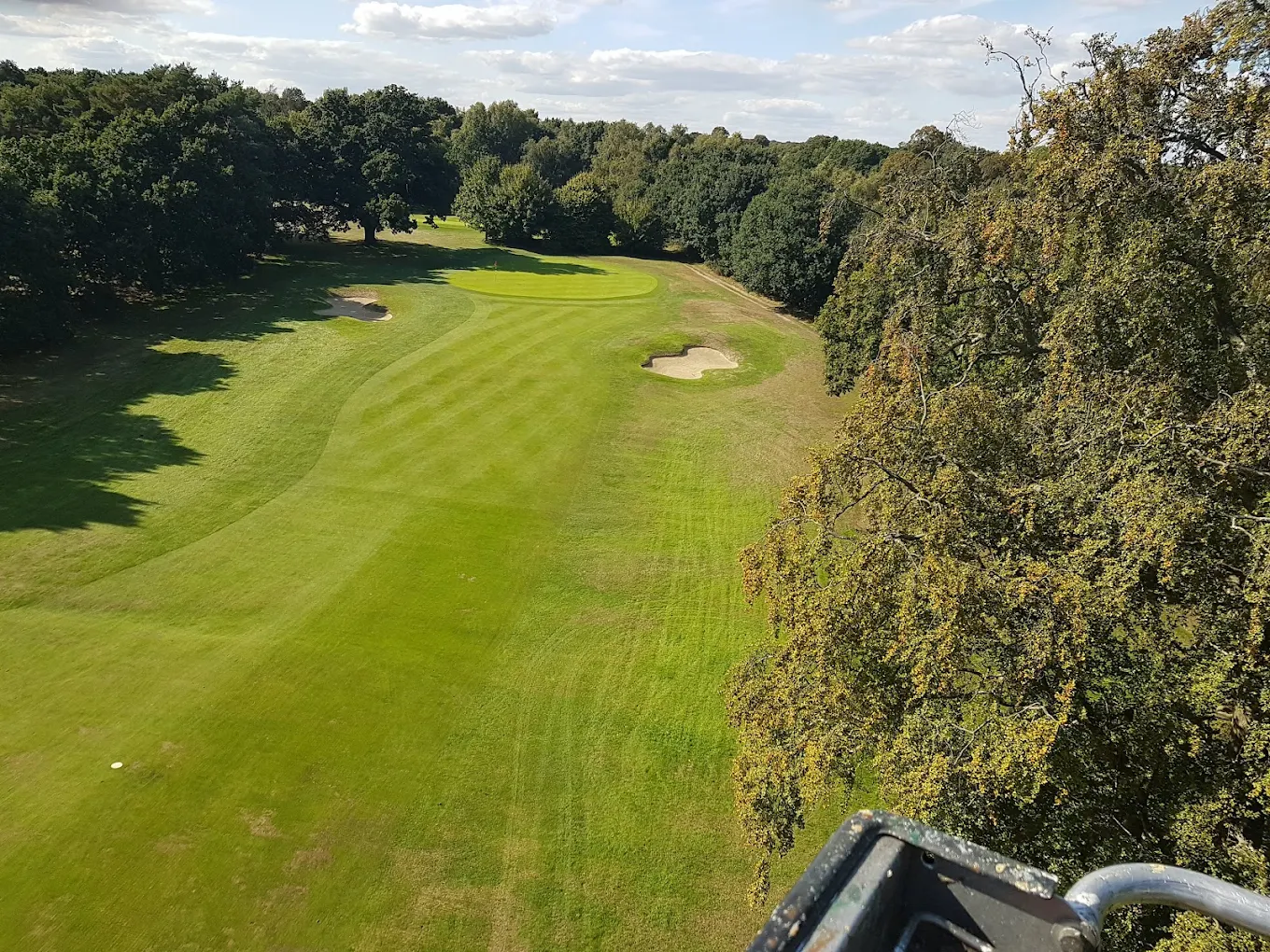
Beaconsfield is quintessential Colt: a parkland course where each hole has its own character, separated from its neighbours by mature mixed woodland. The greens are unusually large, which flatters the approach but places a real premium on lag putting, and the bunkering — a Colt signature — is both plentiful and beautifully placed. Little has changed since 1913, so you are, in effect, playing a living piece of golf architecture.
From the Black tees the card reads 6,584 yards, par 72, with a front nine of 35 and a back nine of 37. The routing gives you four par threes, ten par fours and four par fives, and the visitor tees (Blue for men at 6,171 yards, Gold for ladies) keep the challenge fair without blunting it. It is an easy walking course apart from the climbs at the 6th and 8th, and single-seat buggies are available for hire if you would rather ride.
Accuracy matters more than raw power here. With woodland framing every fairway and Colt’s bunkers waiting at driving distance, the smart play is often position over distance — then let those big greens receive a confident approach.
Signature holes
Beaconsfield’s strength is the consistency of the whole eighteen rather than one celebrated postcard hole, but several holes on the card stand out for the shape of the test they set.
Hole 1
At 453 yards from the Black tees (436 from the Blue), the opener is the longest par four on the course and the third-hardest hole on the card. There is no gentle handshake here: a solid drive and a committed long approach are required straight away, setting the tone for the round.
Hole 6
The stroke index 1 hole. A 425-yard par four that also involves one of the few real climbs on the course, it asks for two well-struck shots in succession. Walk off with a four and you have beaten the hardest examination Beaconsfield sets.
Hole 14
The longest hole on the course at 562 yards from the tips, and stroke index 2. This par five demands three thoughtful shots for most players, with Colt’s bunkering punishing anything loose along the way.
Hole 15
Relief and temptation in equal measure: a 279-yard par four, the easiest hole on the card at stroke index 18. Longer hitters will eye the green from the tee, but the short hole is short for a reason — the defences tighten the closer you get.
Why play Beaconsfield Golf Club
Because this is authentic Harry Colt, preserved rather than remodelled. Golfers travel the world to play Colt’s work at Sunningdale, Wentworth and Pine Valley; at Beaconsfield you experience the same design mind on a course that remains close to his 1913 drawings, at a fraction of the fuss.
The presentation is consistently excellent, the practice facilities are first-rate, and the club’s junior pedigree — celebrated each year through the Luke Donald Salver — speaks to a place that takes its golf seriously. Add a Grade II listed clubhouse and a railway station at the gate, and you have one of the most complete day-trip courses within easy reach of London.
Clubhouse and facilities
The clubhouse is a fine Grade II listed building by Stanley Hamp, traditional in style but modern in comfort. Hot and cold meals are served on the ground floor, while formal lunches and dinners are held in the upstairs dining room, a lovely space seating around 100 beneath an impressive vaulted ceiling with views over the course.
Outside, the practice facilities are among the best in the county, and the pro shop offers equipment, apparel and lessons from the professional team. Single-seat buggies can be hired, though note that the club does not hire out golf clubs, so bring your own set. Electric vehicle charging points are available in the overflow car park.
Green fees and booking
Visitors are welcome Monday to Friday by booking through the professional, and may play at weekends and on public holidays as the guest of a member. All visitors need a current handicap certificate. Green fees are typically around £125 for a weekday round, rising to about £185 for a full day, with roughly half-price rates for juniors and reduced county-card rates. For current green fees and tee times, check the official website.
Getting there and parking
Beaconsfield Golf Club sits in Seer Green, a short hop north-east of Beaconsfield itself and remarkably easy to reach from London.
- By car: Leave the M40 at junction 2 (Beaconsfield), then follow the A355 towards Amersham before turning onto the local lanes signposted to Seer Green and Farm Lane.
- By public transport: Chiltern Railways serves Seer Green & Jordans station on the London Marylebone line — the station stands directly beside the club’s car park, making this one of the most train-friendly courses in England.
- Address & parking: Farm Lane, Seer Green, Beaconsfield, Buckinghamshire HP9 2UR. On-site parking is ample, with EV charging points in the overflow car park.
Where to stay
Beaconsfield makes the natural base, with its handsome Old Town offering hotels and comfortable inns just a few minutes’ drive from Seer Green. You will also find familiar chain hotels around the town’s M40 approaches for straightforward, good-value stays.
For a broader choice, Gerrards Cross and Amersham are both close at hand with guesthouses and small hotels, while Marlow and Windsor — each within around half an hour by car — suit those who want riverside charm or castle views alongside their golf.
What to pack
Bring your own clubs — the club does not offer hire sets — along with a current handicap certificate, which all visitors must show. Smart golf attire is expected on the course and in the clubhouse; leave the denim and trainers at home. The Chilterns weather can turn quickly, so pack a waterproof layer year-round, plenty of balls for the tree-lined holes, and comfortable spiked or hybrid shoes for the climbs at the 6th and 8th.
Nearby attractions
| Attraction | Appeal | Distance |
| Bekonscot Model Village & Railway | The world’s oldest original model village, a delight for families | ~2 miles |
| Milton’s Cottage, Chalfont St Giles | The 16th-century cottage where John Milton completed Paradise Lost | ~3 miles |
| Chiltern Open Air Museum | Rescued historic buildings and living history in Chiltern countryside | ~4 miles |
| Burnham Beeches | Ancient woodland nature reserve with tranquil walking trails | ~6 miles |
| Cliveden (National Trust) | Grand Italianate mansion gardens above the Thames | ~8 miles |
| Windsor Castle | The world’s oldest and largest occupied castle | ~11 miles |
Conclusion
Few courses let you walk straight off a train and onto a near-untouched Harry Colt masterpiece — Beaconsfield Golf Club does exactly that, and it remains one of the most rewarding days of parkland golf in the south of England.
Frequently asked questions
Who designed Beaconsfield Golf Club?
The course was designed in 1913 by H.S. “Harry” Colt, one of the most celebrated golf course architects in history, whose portfolio includes Sunningdale New, Wentworth, St George’s Hill and Pine Valley in the United States. Colt was engaged by Colonel William Du Pre to replace the estate’s original nine-hole Wilton Park course with a full championship-standard eighteen. The course opened in July 1914 and remains remarkably close to Colt’s original design today, complete with his trademark strategic bunkering and unusually large greens. The Grade II listed clubhouse was designed at the same time by the prominent London architect Stanley Hamp, so both course and clubhouse survive as a coherent piece of Edwardian golf heritage.
How long is the course and what is its par?
From the back (Black) tees Beaconsfield measures 6,584 yards with a par of 72, made up of a front nine of 35 and a back nine of 37. Visiting men normally play from the Blue tees at 6,171 yards, while visiting ladies play from the Gold tees. The layout offers four par threes, ten par fours and four par fives, with the 562-yard 14th the longest hole on the card and the 425-yard 6th rated the hardest at stroke index 1. Despite its Chiltern setting, the course is an easy walk apart from the climbs at the 6th and 8th holes, and single-seat buggies are available to hire.
Can visitors play Beaconsfield Golf Club?
Yes. Beaconsfield is a traditional private members’ club, but visitors are genuinely welcome from Monday to Friday by prior arrangement, with bookings made through the professional. At weekends and on public holidays, visitors may play only as the guest of a member. Every visitor must hold a current handicap certificate, so make sure you can produce one on the day. Green fees sit typically around £125 for a weekday round, or about £185 for a full day, with reduced rates for juniors and county-card holders. For current green fees and tee times, check the official website.
Is there a train station near the club?
There is a train station effectively inside the club grounds — a genuine rarity in English golf. When the London to Birmingham railway was built through the Wilton Park estate, Colonel Du Pre negotiated a covenant requiring the railway companies to build a halt beside his planned clubhouse. That halt opened in 1915 as what is now Seer Green & Jordans station, and it stands directly beside the club’s car park. Chiltern Railways runs services from London Marylebone, so you can travel from central London to the first tee without a car — one member famously remarked that Beaconsfield has “its own railway station in its car park”.
What facilities does the club offer?
The Grade II listed clubhouse serves an excellent range of hot and cold meals on the ground floor, while the upstairs dining room — seating around 100 beneath a vaulted ceiling — hosts formal lunches and dinners with views over the course. The practice facilities are a real strength of the club and complement the course superbly. The pro shop stocks equipment and apparel, and the professional team offers lessons for all standards. Single-seat buggies are available for hire, electric vehicle charging points are provided in the overflow car park, and the club runs a respected junior programme headlined by the annual Luke Donald Salver. Note that hire clubs are not available, so bring your own.
What is the connection with Luke Donald?
The club hosts the Luke Donald Salver, a 36-hole junior medal competition named in honour of the former world number one and Ryder Cup-winning captain. The event forms part of the Berks, Bucks & Oxfordshire county Order of Merit and serves as a qualifier for national junior honours, attracting some of the best under-18 golfers in the region. It reflects the club’s long-standing commitment to junior golf and gives young players the chance to test themselves on a genuine Harry Colt championship layout, following the path of a player who went on to the very top of the world game.
Neath Golf Club
Neath Golf Club (Neath, Neath Port Talbot, Wales) Nestled high above the picturesque Neath Valley, Neath Golf Club offers a golfing experience that is as visually stunning as it is challenging. Designed by the legendary James Braid, this heathland course provides a...
Delta Hotels Marriott St Pierre Country Club
Delta Hotels Marriott St. Pierre Country Club (Chepstow, Monmouthshire, Wales) Nestled in the heart of Chepstow, Monmouthshire, Wales, the Marriott St Pierre Hotel and Country Club is a golfer’s paradise steeped in history. Set within 400 acres of rolling parkland,...

Llandrindod Wells Golf Club
Llandrindod Wells Golf Club (Llandrindod Wells, Powys, Wales) Nestled in the heart of the Welsh countryside, Llandrindod Wells Golf Club offers a golfing experience that is as much about the journey as it is about the destination. Perched on a gently undulating...

Welshpool Golf Club
Welshpool Golf Club (Welshpool, Powys, Wales) Perched atop Golfa Hill, Welshpool Golf Club is a hidden gem that promises an unforgettable golfing experience. This James Braid-designed, 18-hole course in Welshpool, Powys, Wales, captivates with its breathtaking views...

Bull Bay Golf Club
Bull Bay Golf Club (Amlwch, Isle of Anglesey, Wales) Bull Bay Golf Club, nestled on the northern coast of Anglesey, Wales, is a hidden gem that captivates golfers with its dramatic coastal setting and rich history. Imagine standing on an elevated tee, the Irish Sea...